There is a detail in the “Joe Bevilacqua” solution of Zodiac’s name cipher that appears to tie directly into the Mostro case.
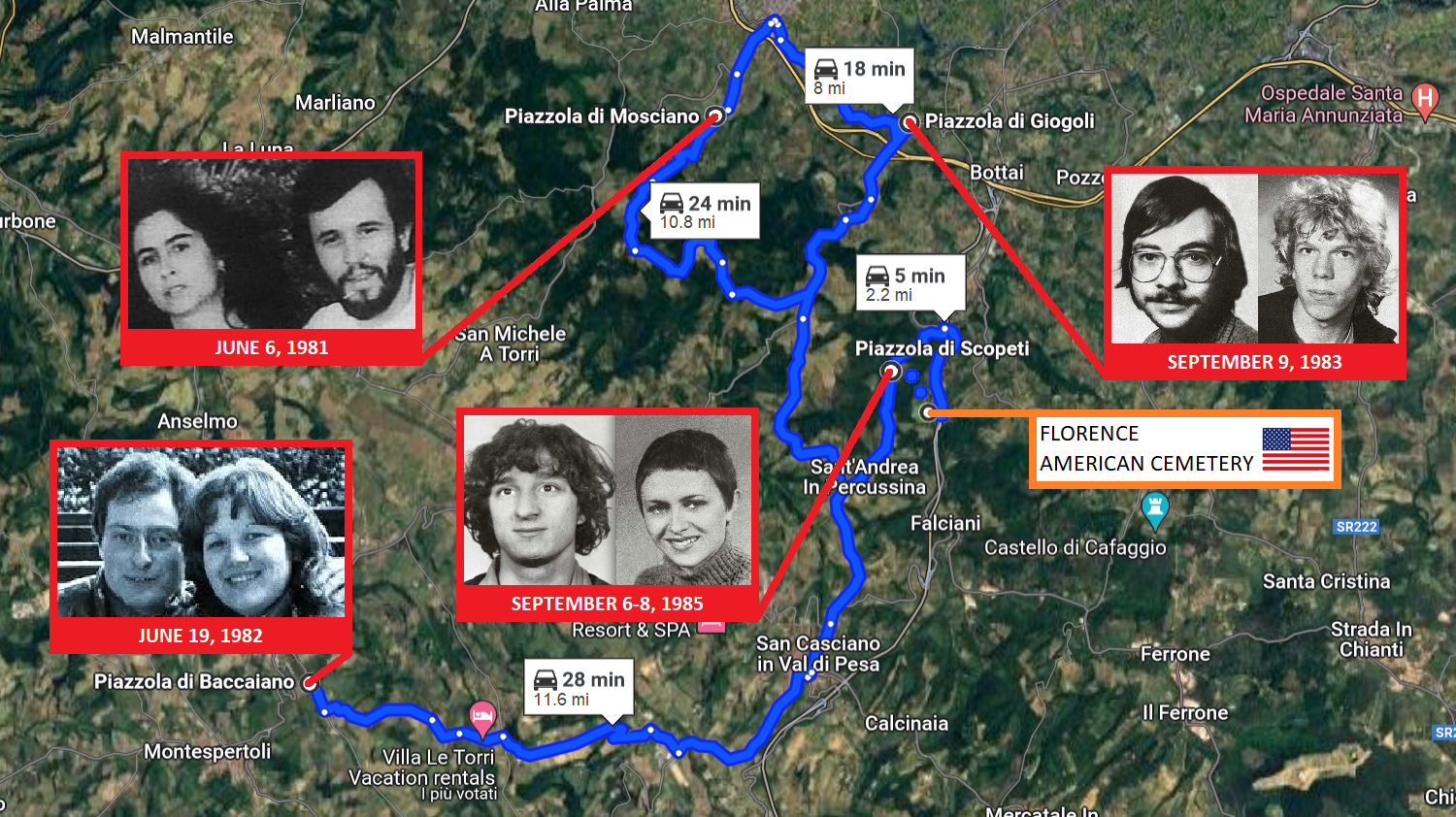
A word that could shed some light on a tip-off to the police by Mario Vanni, former postman from San Casciano in Val di Pesa and alleged accomplice of the Monster of Florence.

In 2000 Vanni was sentenced to life imprisonment.
According to Italian justice, he, Giancarlo Lotti and Pietro Pacciani (not definitively convicted) would have committed some of the Monster’s murders.
Vanni always professed himself innocent. In 2003, while serving his sentence in prison in Pisa, he stated in a conversation with his friend Lorenzo Nesi that the real Monster was an American, a black man and that Pacciani would have met him in the woods.
The former postman did not know who the American was, but he had one more piece of information about him.
"Ulisse, he was called."
A name or a nickname?
Ulysses is the Homeric hero par excellence, protagonist of “Odyssey”.
King of the small Greek island of Ithaca, a shrewd warrior with a “multifaceted intellect”, Ulysses is the inventor of the famous wooden horse that allowed the Achaeans to defeat the city of Troy after a 10-year war.
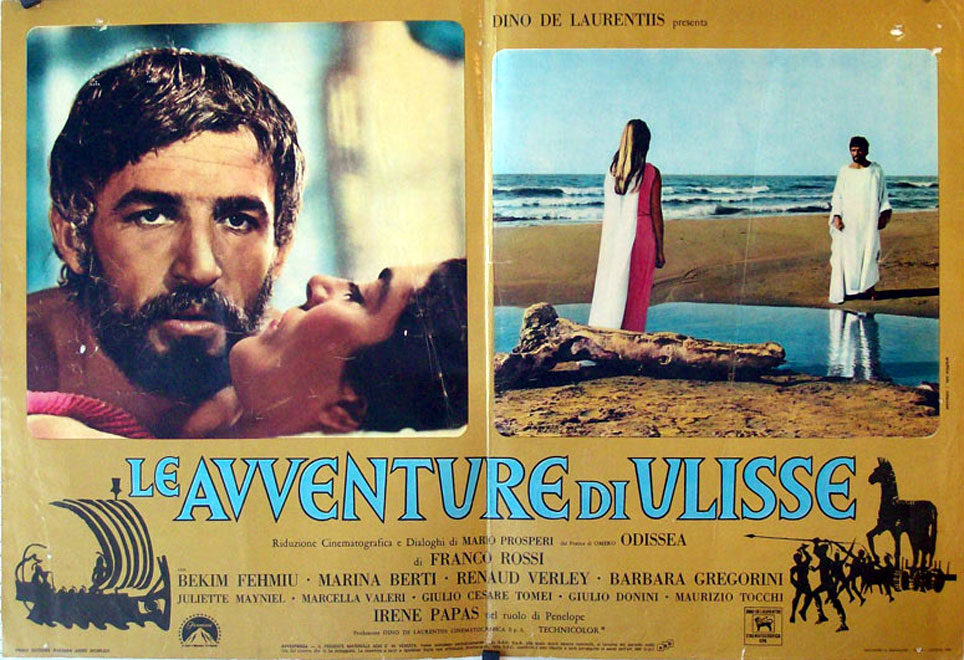
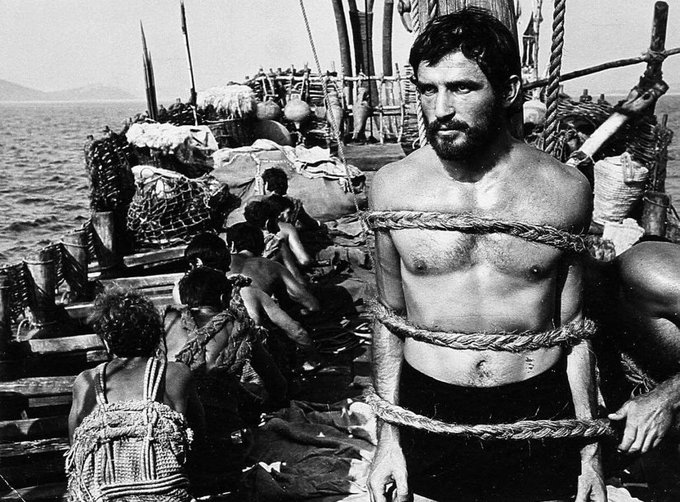
The vicissitudes of Ulysses peaked in popularity in Italy in the ’60s and ’70s thanks to a RAI television adaptation of the Odyssey.
The miniseries directed by Franco Rossi was also adapted for the cinema and there have been many television reruns on RAI from ’68 to date.
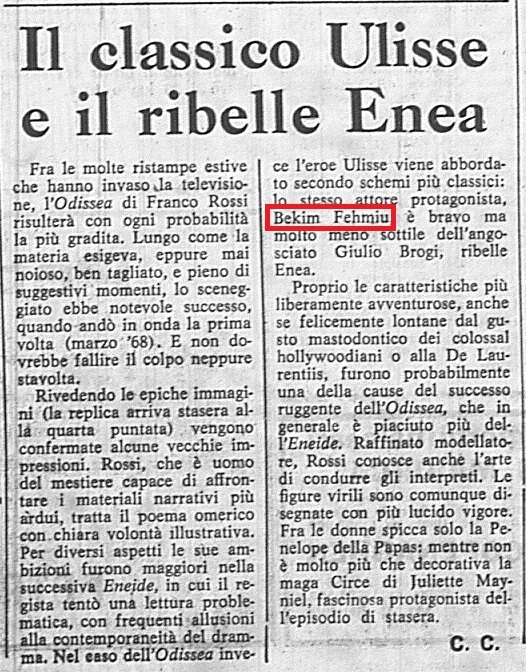
The Serbian-Albanian actor Bekim Fehmiu played the role of Ulysses.
And it is precisely the actor’s name, Bekim, that appears “mysteriously” when comparing “Joe Bevilacqua” with the encrypted name of Zodiac sent to San Francisco in April 1970.

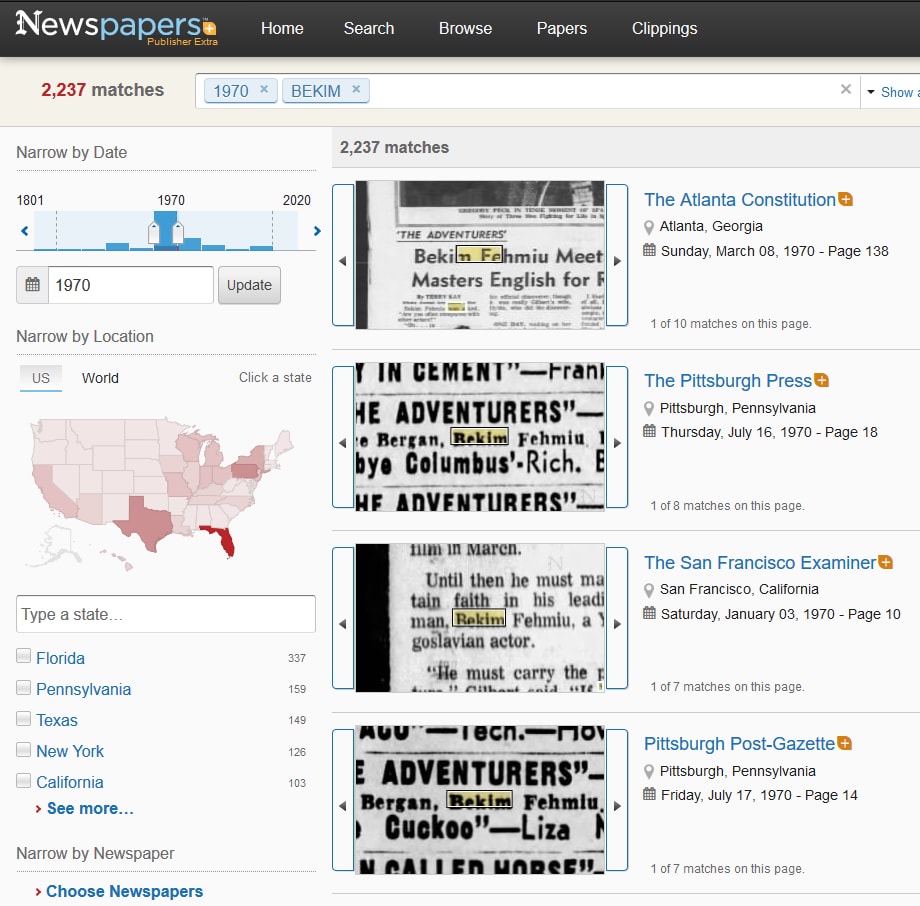
In 2018, to check if it was a coincidence, I carried out a search on newspapers.com, a site that collects millions of editions of US newspapers.
I set the search filter for the word “BEKIM” to the year 1970.
The result was unequivocal.
“BEKIM” is associated almost exclusively with the actor who played Ulysses. Bekim Fehmiu.
There is a reason.
In the spring of 1970, Fehmiu played the role of Dax Xenos, the Latin lover protagonist of the Hollywood film “The Adventurers”.
An expensive film, for the time, which featured actors like Charles Aznavour and Candice Bergem.
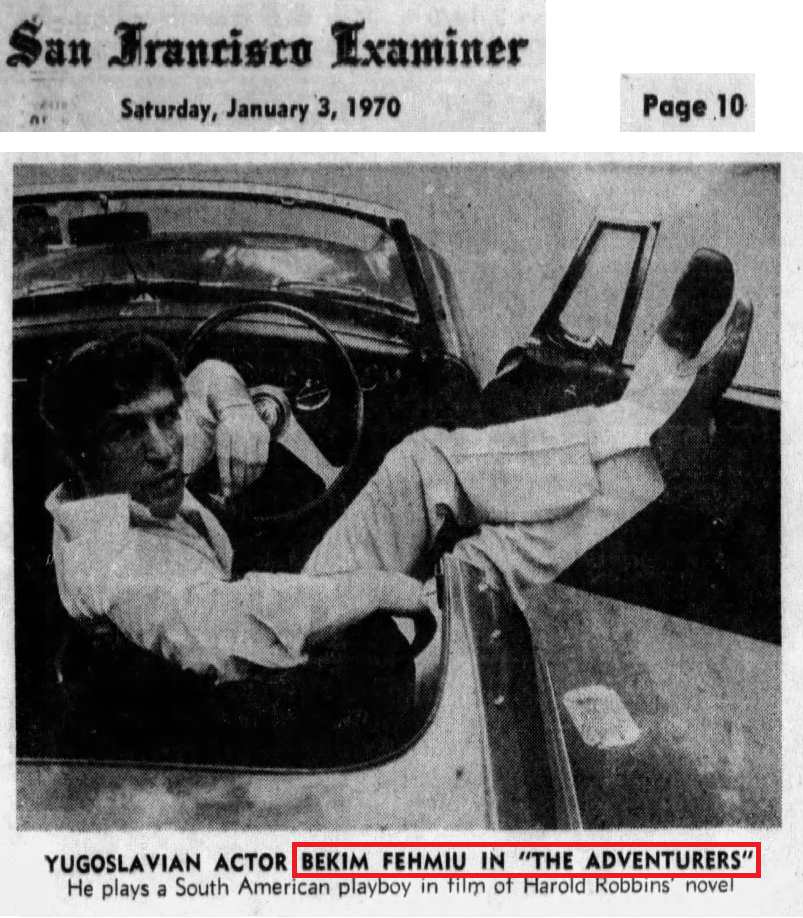
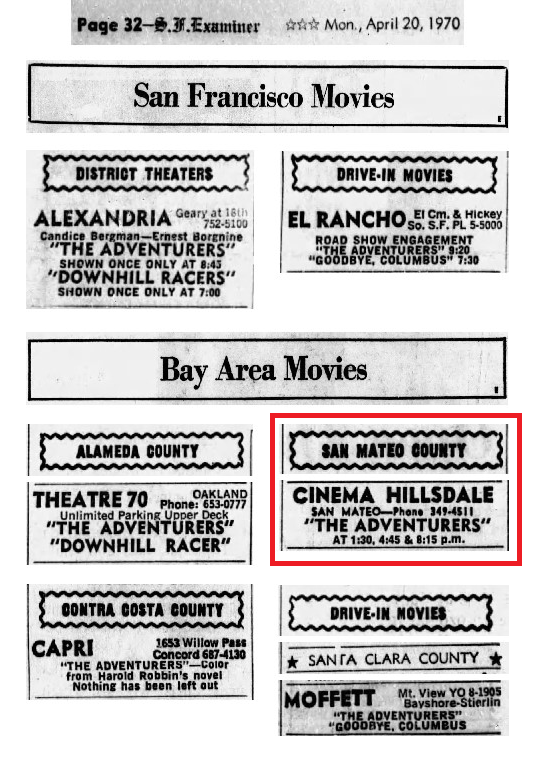
On April 20, 1970, the day Zodiac’s letter with his encrypted name was postmarked at the San Francisco post office, “The Adventurers” was screening in six theaters / drive-ins in the city and the Bay Area (next gallery).
It had already been that way for weeks.
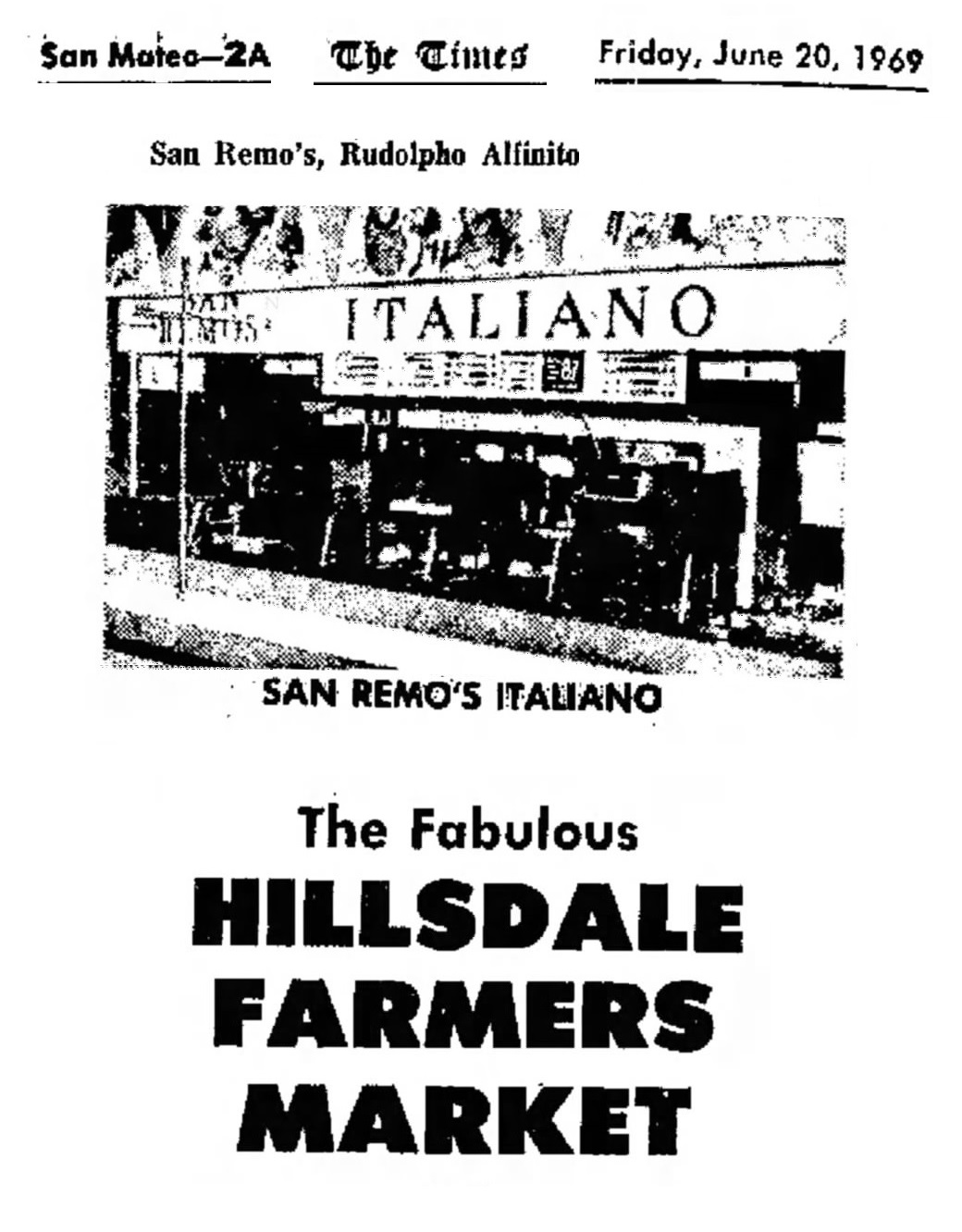
One of the movie theaters was on the screen at the Hillsdale Cinema in the homonym shopping center in San Mateo.
There was also the restaurant “Italiano” owned by the San Remo Italian Food Company, a firm at the time investigated by the Army CID in the investigation into the “Khaki Mafia” in which Bevilacqua confided to me that he had participated in our talks in 2017.
In July 1974, a few months before the series of murders attributed to the Monster began with the Borgo San Lorenzo crime, RAI was broadcasting a repeat of the 1968 television series “Odyssey” in which Fehmiu played the role of Ulysses.

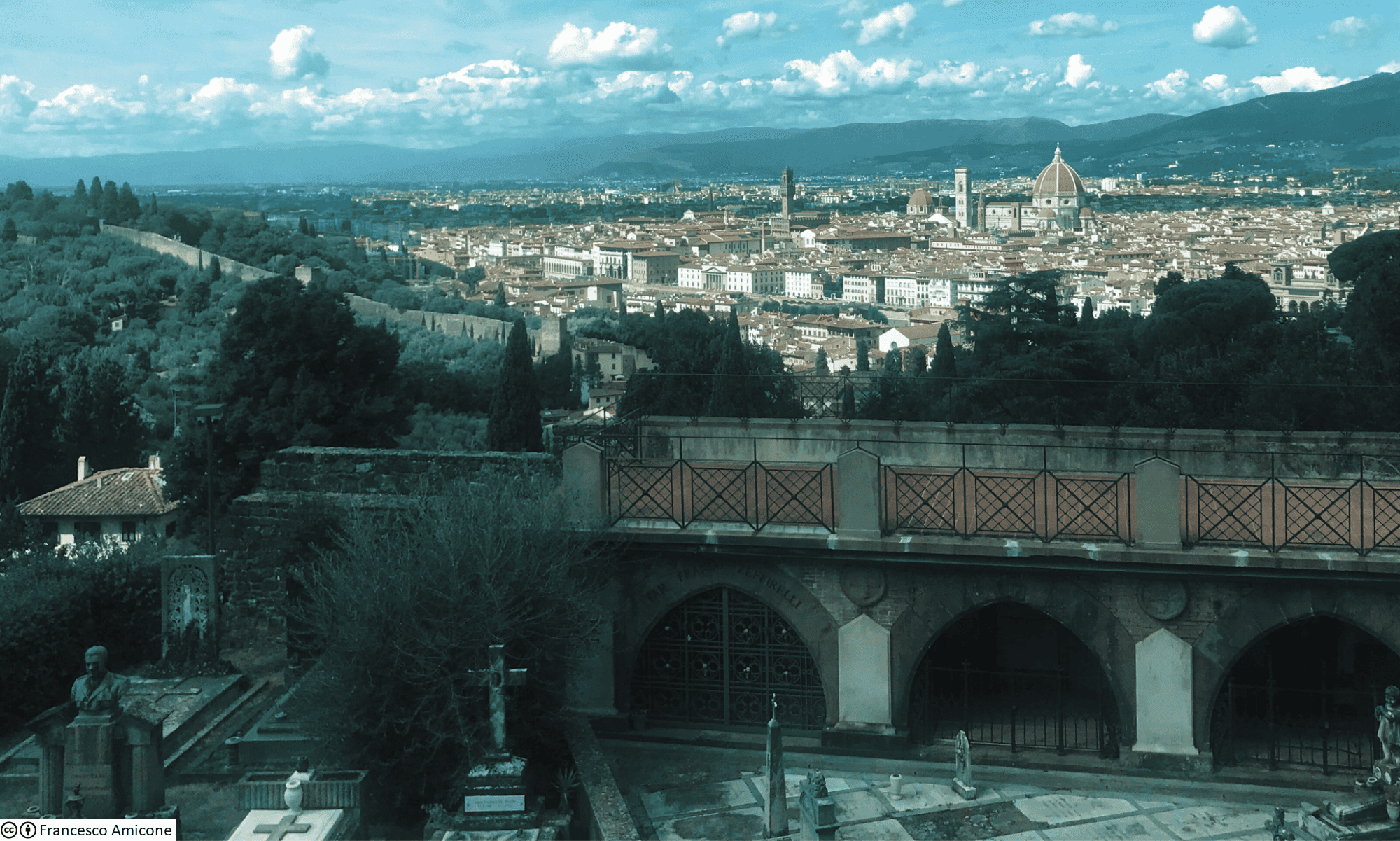
July 1974 is also the month in which Joe Bevilacqua moved to the American Cemetery in Florence, near Falciani (biographical article).
“JB”, as Bevilacqua is called on the Monster themed forums (including “Sneak JB Fellowship” managed by Jim Morrison84) lived 400 yards from what would have been the last scene of a crime attributed to the Florentine serial killer.
In ’94, he testified at the Pacciani trial saying that he recognized the defendant in a suspicious individual spotted in the days before the double murder of ’85.
Bevilacqua would have noticed Pacciani walking at the edge of the Scopeti woods, not far from the cemetery where the American lived and worked at the time.

Is Bevilacqua behind Ulysses?
Let’s start from the beginning.
From Vanni’s words.
The taped conversation
In June 2003, the former postman from San Casciano in Val di Pesa convicted as an accomplice of the Monster of Florence, intercepted by the police, confessed to his acquaintance Lorenzo Nesi that he had some information about the real serial killer. Pacciani?
"No, it wasn't him."
According to Vanni, the serial killer was an American, a “nero” (black) who called himself “Ulysses”. Nesi and the investigators had never heard of him, until then.
Who is this “nero”?, asks Nesi.
Vanni didn’t know. “He came from America”, he assured the skeptical interlocutor.
It is a mystery how this unknown information had got to the postman. Police and carabinieri had been hoarding gossip, chatter for years; was it possible that the name of Ulysses hadn’t leaked until then? It could have been some secret kept up by Vanni who, as he got older, struggled to keep that.
Vanni claimed that Ulysses would have told someone (it seems Pacciani) that he was responsible for all the murders of the Monster. It is unknown when and where the American and Vanni’s source met precisely. It is known that they ran into each other in a wood.
The taped conversation continues with the postman who seems to confuse what he had heard from the primary source and others: the American would have committed suicide, have left the guns to “the prosecutor who counts” (DA Piero Luigi Vigna?) and have attributed his crimes in a letter. Vanni would have learned these things on television.


Parker
Regardless of how these statements will be taken out of context, the alleged identification of “Ulysses” was a failure. Perhaps it would have been useful to record it, rather than simply producing a written report.
According to investigative recounts, on July 10, 2003, the police submitted the picture of an American citizen who was touched by the investigation on the Monster in 1983 to the prostitute Gabriella Ghiribelli, the “Gamma” witness of the trial against Vanni and his drinking partner Giancarlo Lotti.
“By chance, did this man call himself Ulysses?”, police officials asked her.
Of course, “Giancarlo called him Uli”, but “he wasn’t colored”, replied the witness, referring to the term “nero”.
The suspect was named Mario Robert Parker. He could not defend himself from this “identification” because he died of AIDS in 1996.
In the 1980s, Parker had stayed in the guest house of Villa La Sfacciata, near Florence. He was a bachelor gay stylist and none of his relatives had ever heard him call “Ulysses”. It is therefore not clear why he should be the person indicated by Vanni, apart from the fact that he was an American already examined by the police at the time of the crime in Via di Giogoli, the road at which the palace where Parker lived stood. For this reason, nothing else, the judicial police submitted a photo of him to “Gamma”, who seemed to have “recognized” him at the first attempt.
Who Ulysses actually is
Ulysses’ identity has never been ascertained. Vanni had only heard of him, did not know him and did not confirm Ghiribelli’s statements.
If nowdays an attempt was made to know who Ulysses is following a rigorous method of research, and not not very solid “acknowledgments”, it would be necessary to rely on the words that the postman received from his primary source, Pacciani, excluding Vanni’s verified interpolations, that is whatever he would have learned from other sources, such as television, from which he would have learnt that Ulysses had committed suicide.
The facts reported to Vanni by Pacciani are certainly four: the Monster was called Ulysses, he was American, “black”, Pacciani met him in a wood. The end.
At least 50 percent of this information can be found not in the words of an impressionable witness, but in a newspaper clipping of 9 years earlier.
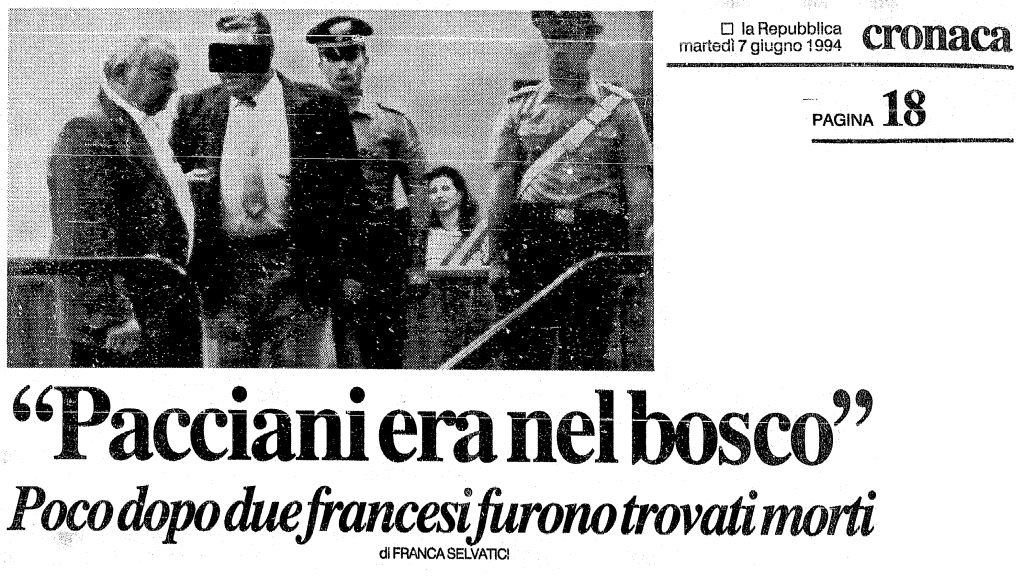
“‘Pacciani was in the woods’. Few time later two French were found dead” reads the title above. The American who runs into Pacciani near a wood is not the designer Parker but the former “criminal investigator” Joe Bevilacqua.
Bevilacqua is not black, but compared to unarmed stylist Parker he has twenty years experience in the U.S. military, 10 of which, both official and unofficial, in the Criminal Investigation Division, which carry on with criminal investigations on members of the U.S. Army. He also fought in Vietnam, where he was awarded a silver medal. He certainly knows how to use firearms, even if he said testifying against the defendant in the Pacciani trial, on June 6, 1994, he did not use guns: “Just the hands”.
Inexplicable is the attitude of an alleged honest witness, Bevilacqua, who failed to say he knew the defendant, at the trial, revealing to myself, twenty years after his testimony, that not only had he met the alleged Monster several times in the Scopeti wood, but that Pacciani had even tried to get hired at the American cemetery managed by Bevilacqua, before he entered a prison again in the 1980s.
However, it is not surprising that Pacciani tried to shut up. He could not expose Bevilacqua without placing himself where the witness claimed to have seen him. He certainly did not want to share with the jury the information that he hung out in the crime area.
Reconstruction of the facts
Follow a hypothetical reconstruction of how it could have gone well.
After the hearing on 6th June 1994, returning to his cell in prison, Pacciani reviews the testimonies that get him into trouble. Bevilacqua’s is one of the worst.
His lawyers, Rosario Bevacqua and Pietro Fioravanti, will say in their speeches that the American is suspicious.
On the day of the hearing, after the confrontation between Bevilacqua and Pacciani, a camera captured an insinuation about the American revolt from the lawyer Bevacqua to the president of the court Enrico Ognibene:
"What if the Monster was him?"
A memory surfaces from the past.
The encounter with a hooded man in the Scopeti woods, near the American cemetery.
It was the early 80s. Il Vampa was walking along a path when suddenly he found himself in front of him. He was short and heavy built.
The man ordered him to leave in a foreign accent, threatening him. Pacciani, who had mistaken him for a thief, asked him who he was.
He replied, “The Monster.” And he added: “My name is Ulysses.”
Pacciani always thought that Ulysses was just a fool.
He imagines the Monster tall, with long feet. Elegant. The exact opposite of that stocky, clumsy guy he met in the woods.
But, now, comparing Ulysses with Bevilacqua a doubt arises… what if they were the same person?
What if Ulysses wasn’t a fool, but the director of the American cemetery?
This changes everything. Why on earth does Bevilacqua, chief of the American cemetery, with personnel at his service, go around the woods disguised like that?
Is he really the Monster?

When and how Ulysses’ story is shared with Vanni is difficult to say.
Perhaps through a confidant before being released from prison in ’96. Or perhaps later, through the same medium, with Pacciani’s intent to reassure Vanni while he is in prison on charges of complicity in the commission of the murders.
It is not possible to say whether Pacciani intends to inform the police. Perhaps he thinks it is better to blackmail the American by asking him to exonerate him with some evidence sent to the police. In any case, the farmer dies before the appeal is heard again by the Court of Cassation, and the story about Ulysses is not heard until 2003.
It may be that after Pacciani’s death the elderly Vanni, sometimes lucid and sometimes less so, not having been made aware of Ulysses’ true identity, forms his own “idea” about the American killer, “completing” Vampa‘s story with stories he saw on television (as he himself states in the conversation).
Possible meanings of the word “nero”
Bevilacqua is white, not black, some argue. But it is also true that Vanni tells a story that was in turn told to him. There may be a misunderstanding about the term “black”. Two hypotheses can tell us what its original meaning might have been.
First hypothesis. At the time of his meeting with Pacciani, Ulysses may have had his face painted with dark-colored military makeup. It would certainly have been useful, so as not to be seen, or in any case recognized, while he moved in the twilight of the woods hunting for his future victims. Vanni would therefore have interpreted the meaning of “black” as masculine (hypothesis by police officer Andrea Giannini, Florence DA’s Office, 2018).
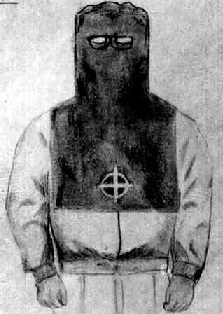
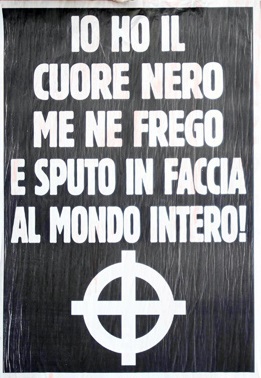
Second hypothesis. In Italy, the Celtic cross with which Zodiac signs himself is almost exclusively associated with neo-fascism. A man with a black hood and a Celtic cross like the serial killer at Lake Berryessa on September 27, 1969 (sketch below), would almost certainly be mistaken for a neo-fascist, ie “a black”. It is in fact quite common to hear neo-fascists called “blacks”. They define themselves this way and identify with this color in their propaganda (poster below).
Because of the Celtic cross embroidered on his disguise, Pacciani mistook Ulysses for a black, that is, a neo-fascist. When he tells the story of the meeting to Vanni, the postman thinks that with “black” his interlocutor is referring to the color of his skin.
Could it have happened like this?
 Zodiac, Mostro di Firenze
You must be logged in to post a comment.